
Learning
Why Smart People Take Fewer Notes.
By Muhammad UmarOctober 13, 20255 min readIssue #9
Writing more down feels like understanding more. It is usually the opposite, and the reason is uncomfortable.
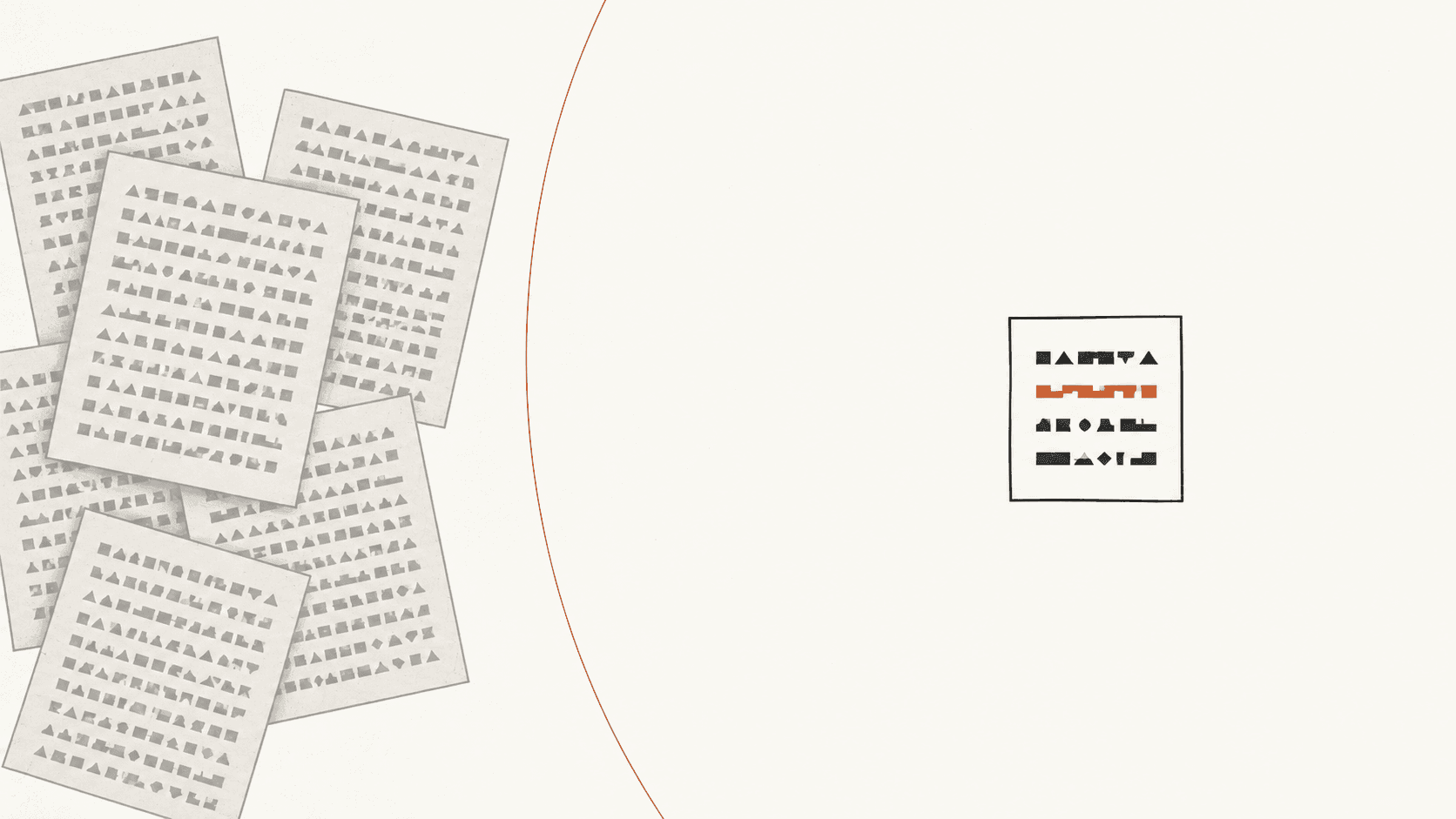
Two people attend the same talk.
One fills six pages. Definitions, examples, the diagram from slide 14, a quote they liked. The other writes four lines and spends most of the hour listening.
A month later, ask them both what the talk argued. The second one can tell you. The first one has six pages and a vague memory of it being interesting.
This is not about being clever. It is about what the two of them were actually doing, because only one of them was making decisions.
Writing things down is not the same as processing them
Transcription is a comfortable activity. Your hand is busy, the page fills, and at the end there is visible output.
But copying requires no decisions. You do not have to judge what matters, work out what the speaker meant, or notice what contradicts something you already believe. You only have to keep up.
That is why it feels productive and delivers so little. Capturing is a motor task pretending to be a mental one. The words move from a screen to a page without going through you.
Writing four lines is harder. To write four you must decide which four, and to decide you must have understood the whole thing well enough to rank it. The constraint is doing the work.
A short note is the residue of a decision. A long note is usually the absence of one.
Every note has a cost you never counted
The reason people write too much is that notes feel free. Storage is unlimited, so more is assumed to be better, or at worst harmless.
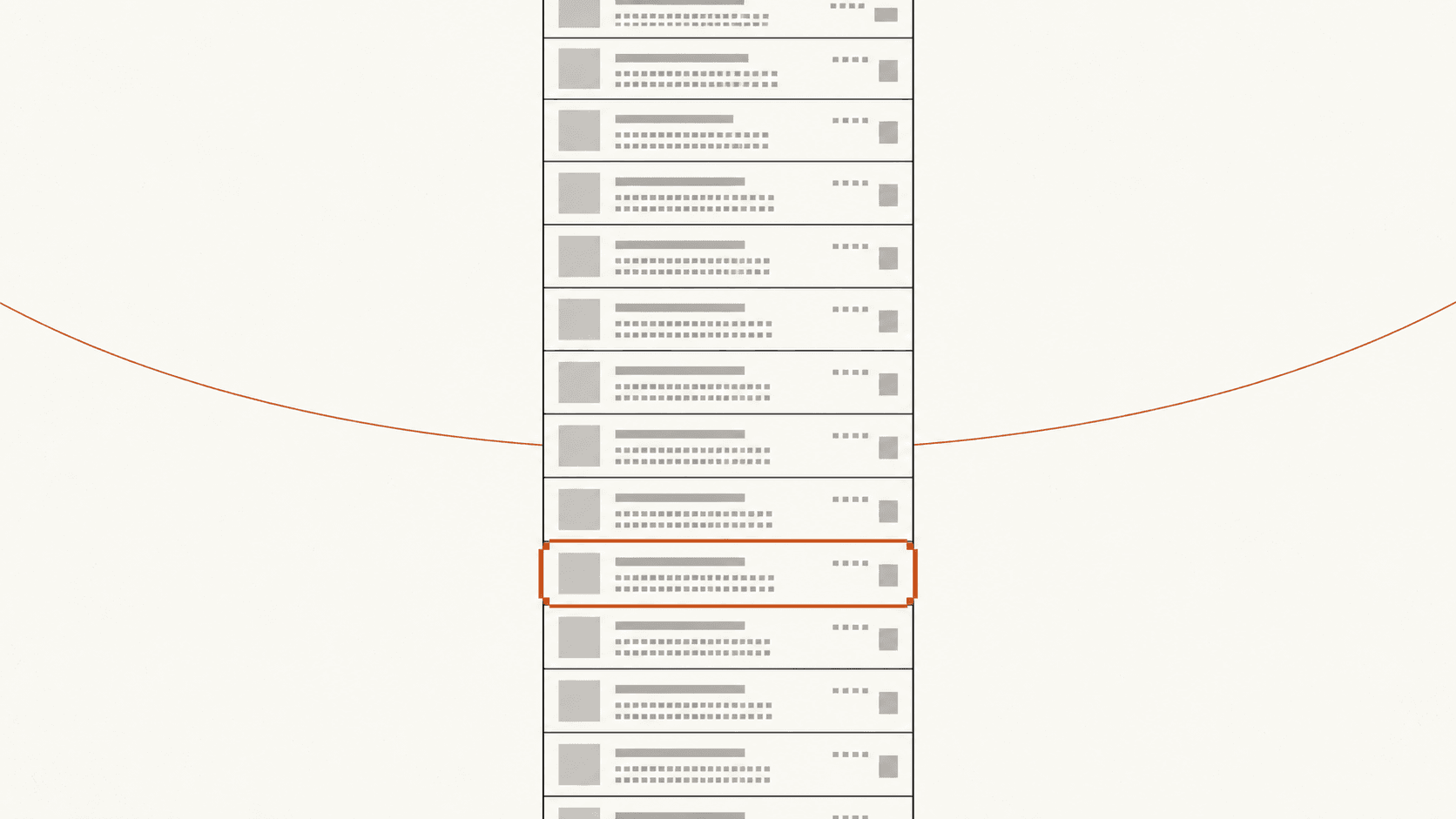
Notes are not free. Each one has an ongoing cost, and you pay it every time you go looking for something.
- It occupies a place in every search result, standing between you and what you wanted.
- It has to be evaluated when you find it, because you must decide whether this is the note you needed.
- It dilutes the signal. A hundred captured articles make ten good notes considerably harder to find than they were.
- It quietly ages. Old material that was never processed does not announce that it is out of date.
So a vault of two thousand captured items is not a richer version of a vault of two hundred written ones. It is a worse one, in the specific sense that retrieving anything from it takes longer and succeeds less often.
This is the part that catches careful people. Nobody deletes a note, because any single note might turn out to be useful. Each individual keeping decision is defensible, and the accumulated result is a system that no longer works.
The test
There is one question that separates a note worth keeping from one that is costing you.
Could I have written this without understanding it?
If yes, it is a copy. A pasted quote, a summary of a summary, a definition transcribed from a slide. It has not passed through your comprehension and it will not connect to anything, because you never worked out what it connects to.
If no, you had to think. You restated something in your own words, drew a conclusion, noticed a disagreement, or recorded why something surprised you. That note carries the work, and the work is the thing that makes it findable later.
The test has a useful side effect. It is fast, and it can be applied at the moment of writing rather than during some future clear-out that will never happen.
What the good notes look like
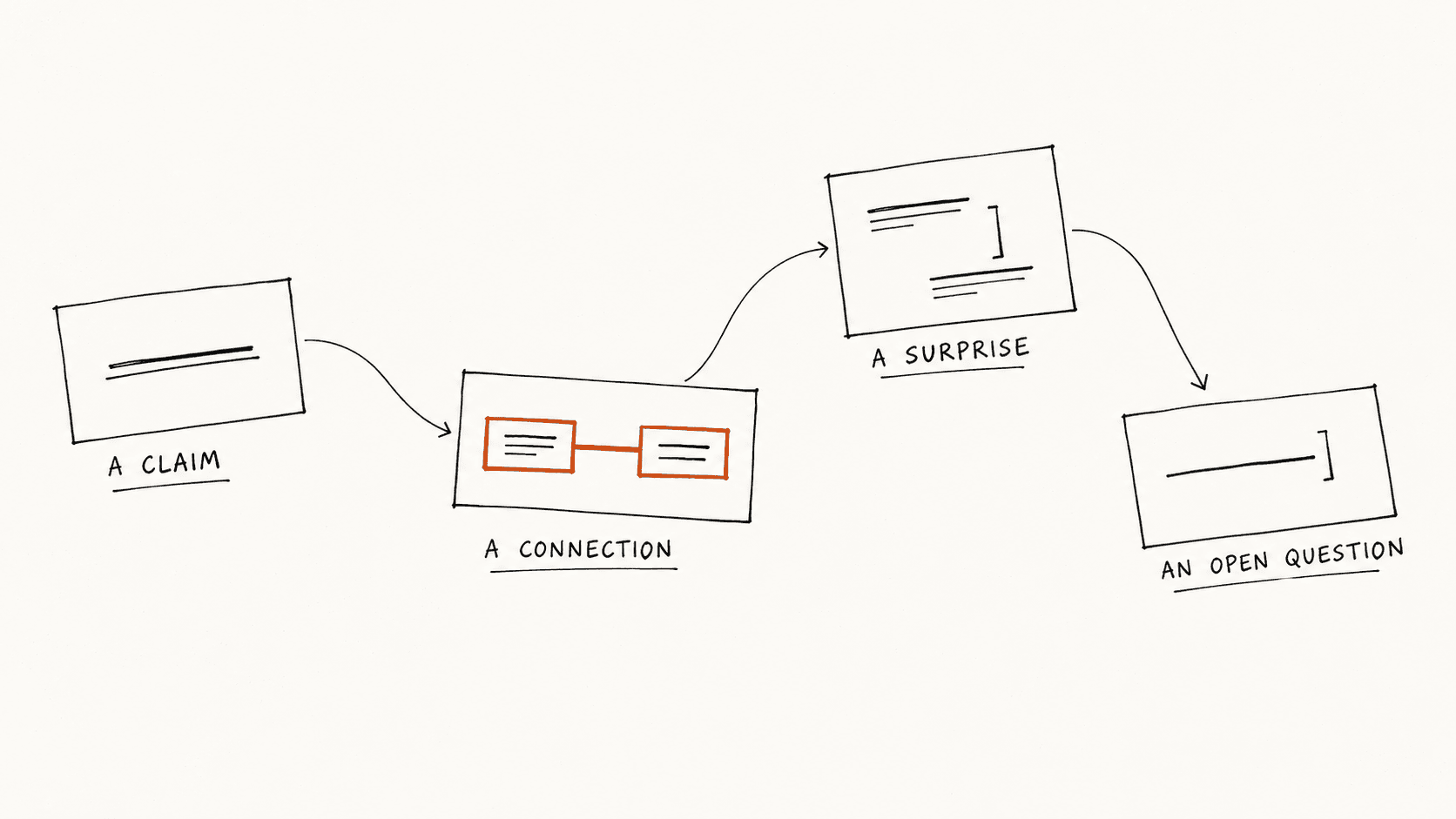
Four kinds survive the test. Between them they cover most of what is worth writing.
A claim you would defend. Not what the author said. What you now think, stated plainly enough that a future version of you could disagree with it.
A connection. This is the same idea as that other thing, in different clothes. These are the most valuable notes you will write and the ones a copy can never produce, because noticing the link requires holding both.
A surprise. Something that contradicted what you expected. Write down what you expected as well, because the gap is the actual content and it disappears within a week.
A question you could not answer. Open questions are worth more than tidy summaries. They give you somewhere to put the answer when you eventually meet it, which is exactly the elaboration mechanism doing its work.
Notice that none of these is a record of what a source contained. All four are records of what happened in your head while you read it.
Reading without writing is allowed
Somewhere along the way a rule took hold that reading without taking notes is wasted. It has made a lot of people worse at reading.
If you stop every paragraph to capture, you never get a run at anything. Arguments are cumulative, and you cannot judge whether the third point is any good while you are still copying the first.
A better shape is to read the thing properly, then close it and write what stayed. What you can recall unaided is a reasonable proxy for what mattered to you, and the act of recalling it is itself the thing that strengthens the memory.
You will lose some detail. That is the point. The detail you lose is the detail you were not going to use, and the ten minutes you did not spend transcribing is ten minutes you can spend on the connection.
When this is the wrong advice
Three cases, and they are all real.
When you are new to a field. Early on you cannot tell what matters, because judging importance requires the knowledge you are trying to acquire. Capturing widely is the right move for a while. The mistake is not starting there, it is never leaving, and people carry beginner habits into fields they now know well.
When the record is the deliverable. Meeting minutes, interview transcripts, an audit trail, clinical notes. Here completeness is the requirement and your judgement is not wanted. That is a different activity that happens to use the same word, and it should live somewhere separate from your thinking notes.
When you genuinely need the exact words. Quotes for citation, contract terms, API details, exact error messages. Copy those precisely. Just keep them as reference material rather than mixing them in with the notes you think with.
The takeaway
The instinct when your notes are not working is to capture more thoroughly and organise more carefully. Both make it worse, because the problem was never that you had too little.
Write less. Make each note carry a decision you actually made. If you could have written it without understanding it, you have not made a note. You have made a copy, and the original was already fine where it was.