
Business
The Client You Should Turn Down.
By Muhammad UmarJanuary 1, 20267 min readIssue #12
Every bad engagement announced itself before anyone signed anything. The signals are boring, early, and easy to talk yourself out of.

Ask anyone who has worked for themselves for a few years about their worst project, and they will tell you the story fluently. They have told it before.
Ask when they first knew, and the answer is almost always the same. Before it started. Sometimes before the first call ended.
That is the strange part. The information was available. It was just inconvenient, and there was a pipeline to fill.
Why the warnings get ignored
The reason is structural rather than personal. A bad signal arrives at the exact moment you are least able to act on it.
You are talking to a prospect because you want work. Work is money, and money is the thing that has been on your mind. Then something slightly wrong happens in the conversation, and you have two options: treat it as noise, or give up a live opportunity based on a feeling you cannot fully justify.
Almost everyone treats it as noise. The cost of doing so arrives months later, and by then it is attached to a completely different set of problems.
The signal costs nothing to ignore today and everything to ignore for a quarter.
So the useful thing is not better instincts. It is a list you decided on in advance, when nobody was offering you anything.
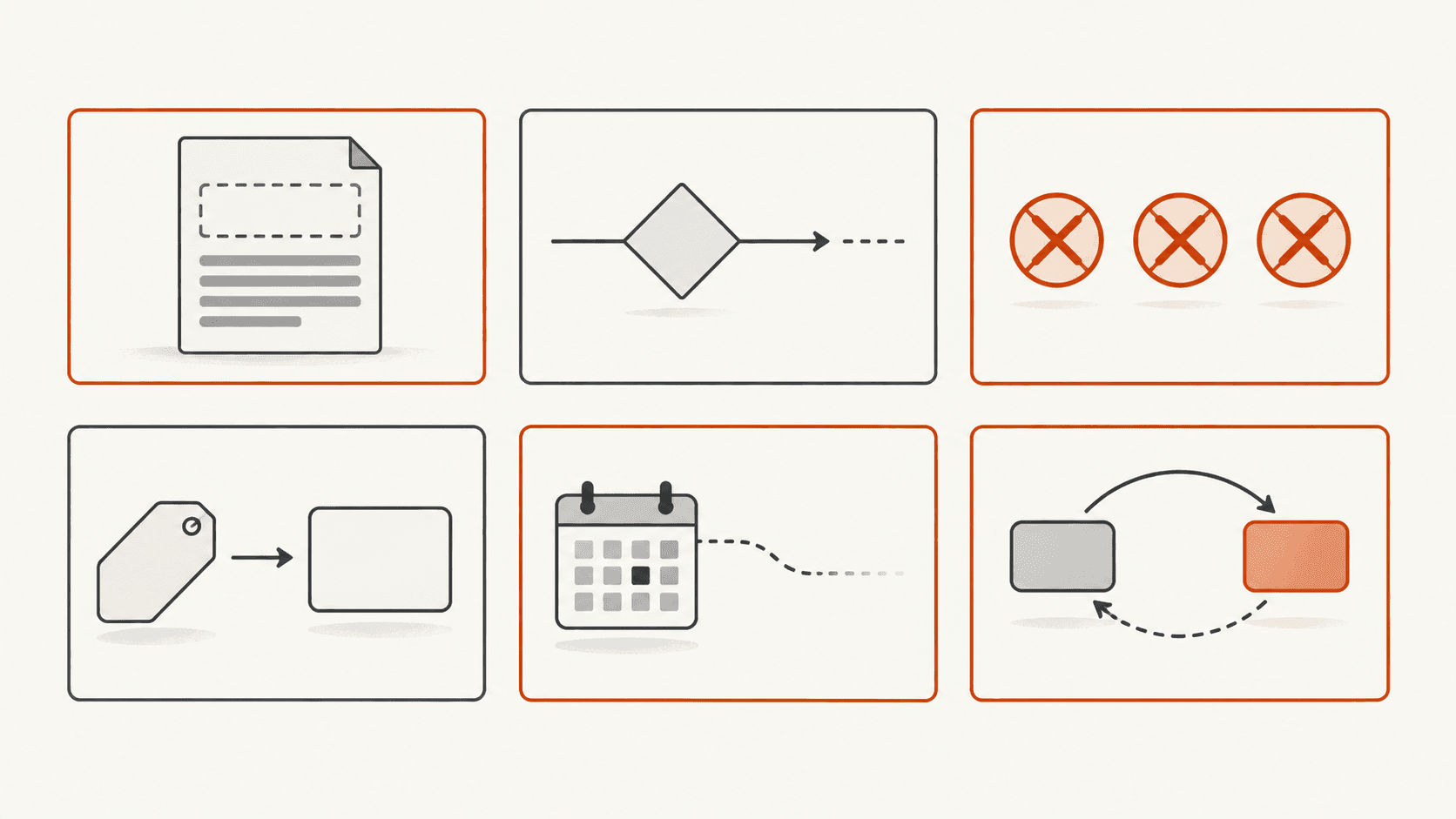
The signals worth acting on
They cannot tell you what problem they have
They can tell you what they want built. Ask what happens today, who it hurts, and what it costs, and the answers get vague.
This one predicts more failures than any other, because a project with no defined problem has no definition of finished. You will build what was asked for and it will not help, and the conversation that follows will be about your work rather than about the missing problem.
It is also the most recoverable. Sometimes the problem exists and nobody has articulated it, and half an hour of asking finds it. The test is whether they engage with the question or steer back to the solution. Steering back twice is your answer.
Nobody in the room can decide anything
You are three calls in and every question comes back with “I will need to check”. Nobody you have met can approve scope, budget, or a change of direction.
The work will not be blocked on difficulty. It will be blocked on someone who is in meetings until Thursday, repeatedly, for months. You will spend the project waiting and then be asked why it took so long.
The fix is not to walk immediately. It is to ask to speak to whoever decides, once, plainly. How that request is received tells you what the next six months look like.
The last person was an idiot
Sometimes the last developer really was bad. Sometimes there have been three, and all three were bad, and a pattern is forming that you are about to become the fourth data point in.
What you are listening for is not criticism, which is fair enough, but whether any part of the account includes something they would do differently. A client who says “we briefed it badly and changed our minds twice” has learned something. A client for whom every past failure was entirely external has learned nothing, and you are the next thing that will fail externally.
The price conversation happens before the problem conversation
Someone who opens with the budget question, before you have established what is broken, is buying hours rather than an outcome. Those engagements get priced by comparison, and when the only axis is rate, someone will always come in under you.
This is not about the number being low. It is about the order. A client who wants to know what it costs before knowing what it is has already decided the work is a commodity, and nothing you do during the project will change that framing.
The timeline came from somewhere you cannot see
There is a date, it is firm, and no one can explain where it came from. Not a launch, a contract, a regulation, or an event. It exists.
Invented deadlines do not behave like real ones. A real deadline gives you leverage, because scope can be traded against it. An invented one is immovable and unnegotiable at once, since nobody can authorise a change to a date whose origin they do not know.
The small things are already going wrong
Calls moved twice at short notice. Documents promised and not sent. Long silences and then urgency.
This is the one people forgive most readily, and it should not be forgiven at all, because it is the only signal you have that is a direct sample of the working relationship. Everything else in the sales conversation is a description of how they will behave. This is a demonstration.
They are being their most attentive right now. It does not get better after the invoice.
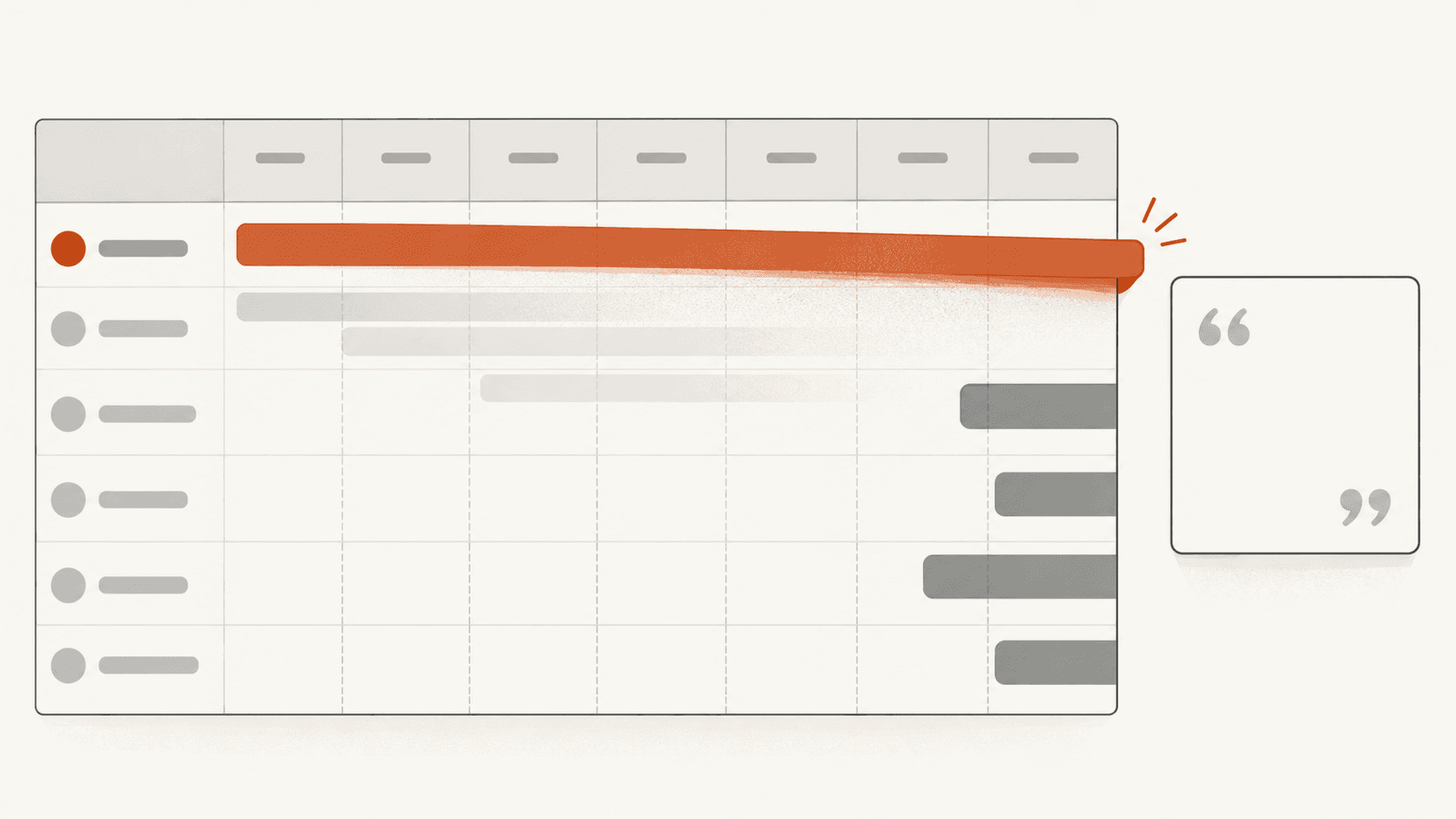
What a bad engagement actually costs
The reason to take this seriously is that the cost is not the project. Most people price a bad client at the revenue, decide it is survivable, and take it.
The real bill has four lines.
- The work itself, which will overrun, because the things that made it a bad fit are the things that make it slow.
- Everything you did not do instead. Bad projects arrive at the same time as good ones and take the slot.
- The reference you now do not have. A difficult engagement rarely ends in a recommendation, so it costs you future work as well as present time.
- The part nobody counts: how much worse you are at everything else while it is running.
That last one is the reason a bad quarter and a bad client tend to be the same quarter. It is not coincidence. Being ground down affects the work you do for everyone.
How to actually say no
Most people avoid declining because they picture a confrontation. It is not one, and the version that works is short.
Do not invent a diary conflict. Say that you do not think you are the right fit for this particular piece of work, give one specific and true reason, and offer a direction if you have one.
Being specific matters. A vague no sounds like a negotiating position and invites more money. A concrete reason, such as needing a decision-maker involved weekly and not seeing where that comes from, ends the conversation cleanly and occasionally does something better: it makes them fix the thing and come back.
That has a side effect worth knowing. Turning work down is read as confidence, because only people with other options do it. Some of the best engagements arrive from people you previously declined.
When this is the wrong advice
This is all much easier to apply when you have a pipeline, and most of the people who need it do not.
When you genuinely need the money. Rent is not a signal to be weighed against a feeling. Take the work, and manage the risk instead: shorter phases, payment up front, a small paid discovery before anything larger. Turning down income you need is not discipline, it is a different mistake with better branding.
When you are new enough that everything looks like a signal. Early on you cannot tell a warning sign from an unfamiliar industry, a stressed founder, or a company that is simply larger than what you are used to. Some of what reads as dysfunction is just how bigger organisations sound. You need a number of engagements behind you before the pattern is real rather than nerves.
When one signal appears alone. Every item above shows up occasionally in projects that go perfectly well. A moved call is a moved call. It is the cluster that predicts, not the instance, and treating any single one as decisive will leave you turning down good work for sport.
The takeaway
The signals are not subtle and they are not late. They are early, ordinary, and easy to explain away, which is exactly why they get explained away.
Write your list down now, while nobody is offering you anything. Then when the moment comes and you find yourself constructing a reason why this one is different, you will at least notice that you are doing it.